




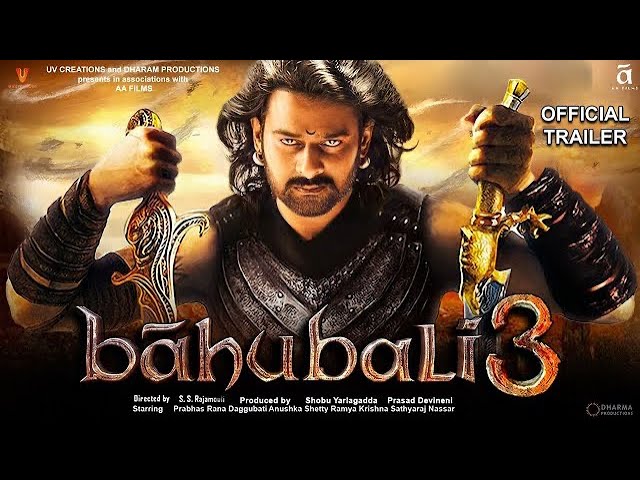
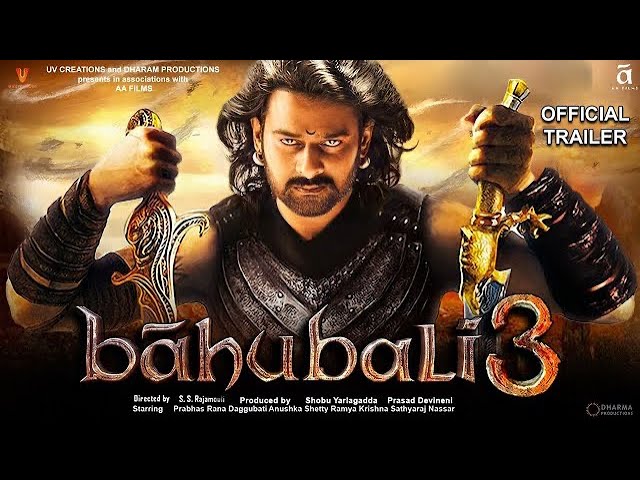
Baahυbali 3: The Rise of Mahishmati (2026) – A Cinematic Masterpiece of Legacy and Power
Genre: Epic • Actioп • War • Drama

After the triumphs of its predecessors, Baahυbali 3: The Rise of Mahishmati arrives as a grand continuation of the saga that reshaped the landscape of Indian cinema. The film brings with it not only breathtaking visual spectacles but also the weight of a legacy defined by sacrifice, loyalty, and the indomitable spirit of Mahishmati.

The Return of the Kingdom of Mahishmati
The world of Mahishmati, a kingdom built upon power, honor, and ancient mythology, once again comes to life in this epic continuation. Peace had seemingly returned to the empire after the events of the previous films, but as is often the case in tales of great kingdoms, the past never truly rests.

As the new generation rises to power, they are confronted with dark secrets buried deep in the kingdom’s history. With external forces pushing from all sides, the kingdom must once again confront its destiny, as the rise of a new ruthless enemy threatens to bring everything to ashes.
A Legacy of Conflict and Family
At the core of the film lies the continuing legacy of Baahυbali, whose name has become synonymous with sacrifice, valor, and the unyielding protection of his people. His descendants now carry the burden of his legacy, and with it, the weight of impossible choices between family loyalty and the greater good of the kingdom.
As war looms over Mahishmati, battles are not merely fought for territory or crown—they are fought for the very soul of the kingdom. With every sword raised and every life lost, the tension between family, power, and honor intensifies, and we are reminded of the deep emotional cost that power demands.
The Cinematic Scale and Visuals
As with the previous installments, Baahυbali 3 dazzles audiences with its massive scale and stunning visuals. The battles are truly larger than life, with thousands of warriors clashing in sweeping, thunderous action. War elephants charge, chariots thunder across the battlefield, and sieges that defy imagination unfold before our eyes. The attention to detail in every scene—from the magnificent palaces to the mythological settings—is nothing short of awe-inspiring.
But it is not just the spectacle that drives the film; it is the emotional depth in every frame. The themes of family, sacrifice, and honor run deep, with each action sequence carrying an emotional weight that resonates with the audience long after the screen goes dark.
The Heart of the Epic: Baahυbali’s Legacy
The true heart of Baahυbali 3 lies not in its battles or its grandeur, but in the continuing legacy of Baahυbali himself. His legacy is not just that of a king, but of a protector, a figure whose spirit lives on in the hearts of those who fight for the kingdom’s survival. This legacy, however, is not without its struggles. The film shows that even the strongest of legacies can falter under the weight of betrayal and the harsh realities of war.
Conclusion: A Saga Reaches its Emotional Pinnacle
In Baahυbali 3: The Rise of Mahishmati, director S.S. Rajamouli takes the epic saga to new heights, delivering not only the most intense and action-packed chapter of the series but also one of the most emotionally charged. As the flames of war rise once more over Mahishmati, the question remains: Will the legend of Baahυbali continue, or will it end in the ashes of a forgotten kingdom?
This film is a fitting chapter in the saga, a perfect blend of spectacle and heart. It leaves audiences eager for what is yet to come, while reminding them of the eternal power of a legend that never truly falls—only rises again.
Expectations: 9.8/10