



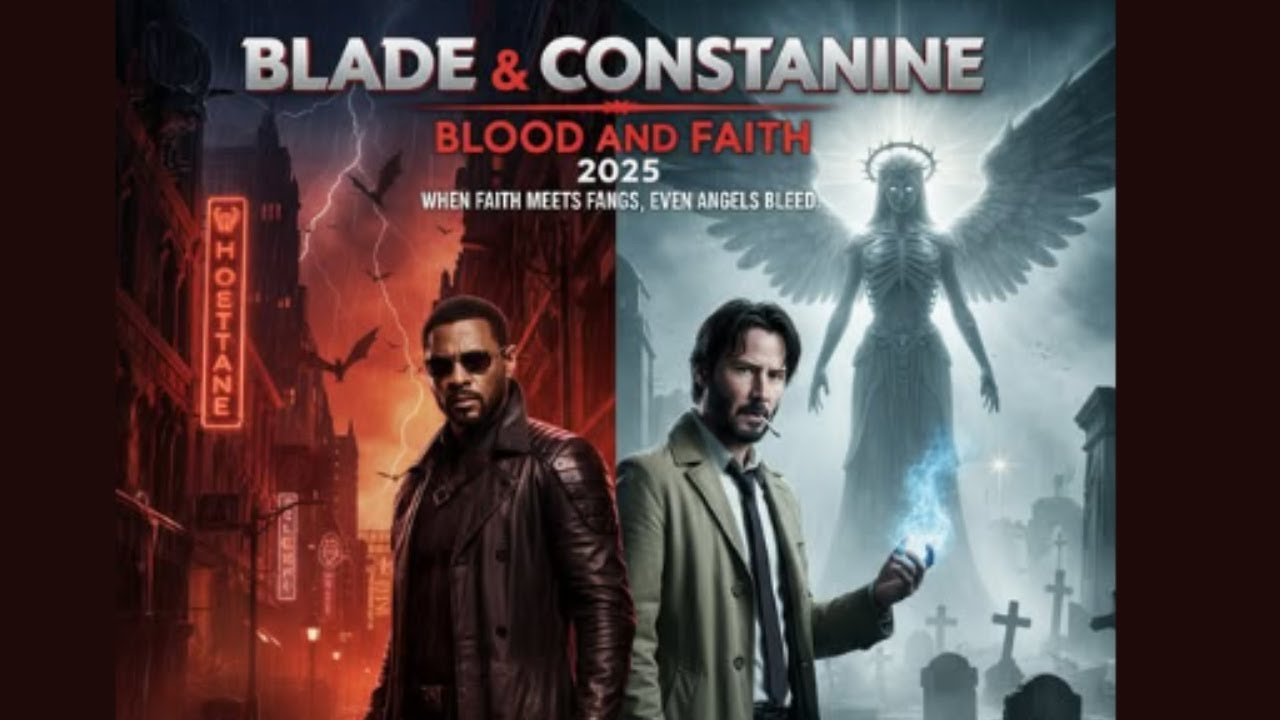
An Unholy Alliance Forged in Shadow
There are crossovers designed by committees, and then there are collisions born of cinematic destiny. Blade & Constantine: Blood and Faith belongs firmly in the latter category. This is not a novelty team-up or a winking exercise in fan service. It is a bruising, atmospheric descent into a world where belief curdles into fanaticism and monsters wear both fangs and scripture. After more than a decade of watching Hollywood mishandle dark material, it is bracing to encounter a film that understands its own moral weight.

Set in a rain-soaked, neon-lit metropolis that feels perpetually on the brink of damnation, the story unites two figures who have always operated at the margins of heroism. Blade hunts vampires with cold efficiency; John Constantine hunts meaning in a universe that seems determined to damn him. Their meeting is less a handshake than a clash of philosophies, and the film is stronger for the friction.

Story and Themes
The plot revolves around the resurrection of the Blood God La Magra by an ancient demonic cult, but that synopsis undersells the film’s ambitions. What Blood and Faith is truly about is the danger of belief without compassion. The cult’s hybrid plague twists faith into violence, transforming worshippers into zealots who see bloodshed as sacrament. It is a bold thematic choice, and the film commits to it without flinching.

Rather than treating religion as mere aesthetic, the screenplay interrogates it. Blade, a man defined by what he is, represents survival stripped of illusion. Constantine, forever bargaining with heaven and hell, embodies guilt, regret, and stubborn resistance. Their uneasy alliance becomes a dialogue about whether redemption is earned, denied, or simply another lie we tell ourselves to keep going.
Performances That Carry the Darkness
Mahershala Ali as Blade
Mahershala Ali does not merely play Blade; he inhabits him with lethal grace. His performance is defined by restraint. There is rage here, but it is controlled, simmering beneath an icy calm. Ali’s Blade feels older, heavier, as if every hunt adds another invisible scar. He speaks less than you expect, and when he does, it matters. This is a redefinition of the character that honors the past while pushing it into more introspective territory.
Keanu Reeves as John Constantine
Keanu Reeves returns to John Constantine with a weary charisma that feels etched into his bones. His delivery balances sarcasm with something closer to despair, and the performance understands that Constantine’s bravado is armor, not confidence. Reeves allows silence to do as much work as dialogue, and his presence grounds the supernatural chaos in human exhaustion.
Direction, Visuals, and Atmosphere
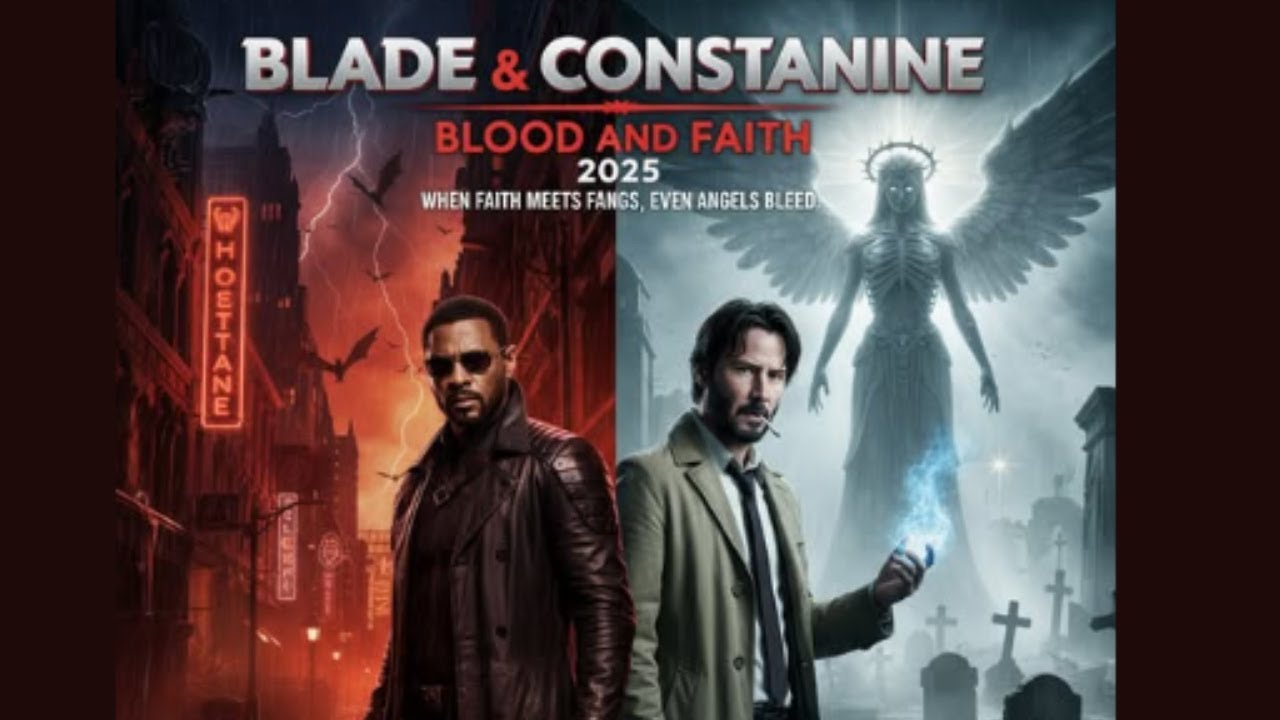
Visually, Blade & Constantine: Blood and Faith is striking without being indulgent. Gothic spires loom over flooded streets, abandoned churches feel heavy with memory, and the city itself becomes a character. The color palette leans into deep reds, cold blues, and shadowy blacks, reinforcing the film’s obsession with blood and belief.
The action is brutal but purposeful. Fights are staged with clarity, emphasizing impact over excess. One much-discussed cathedral sequence stands out not because of spectacle alone, but because it encapsulates the film’s thesis: violence erupting in a place meant for sanctuary. The camera does not linger unnecessarily; it trusts the audience to feel the weight.
Pacing and Structure
The film’s final act is relentless, but it earns that intensity through careful buildup. Earlier scenes take time to establish mood and motivation, allowing the climax to feel inevitable rather than gratuitous. At nearly every turn, the film resists the temptation to rush, which is rare for modern genre cinema.
If there is a flaw, it lies in the density of ideas. Some viewers may find the mythology heavy, and a few supporting characters could have benefited from more development. Yet these are minor issues in a film that aims high and largely succeeds.
Why This Film Matters
What elevates Blood and Faith above standard superhero fare is its seriousness of purpose. It treats horror as metaphor and action as consequence. The violence is not celebratory; it is tragic, necessary, and often exhausting. In an era of disposable blockbusters, this film insists on being felt.
- A mature exploration of faith, fanaticism, and identity
- Commanding performances from Mahershala Ali and Keanu Reeves
- Atmospheric world-building rooted in gothic horror
- Action that serves character and theme, not just spectacle
Final Verdict
Blade & Constantine: Blood and Faith is not just a crossover; it is a confrontation. It asks what we believe, why we believe it, and how far we are willing to go in its name. Dark, emotionally raw, and confidently directed, it lingers long after the screen fades to black. This is genre filmmaking with conviction, and it deserves to be taken seriously.
Rating: 9.6/10