



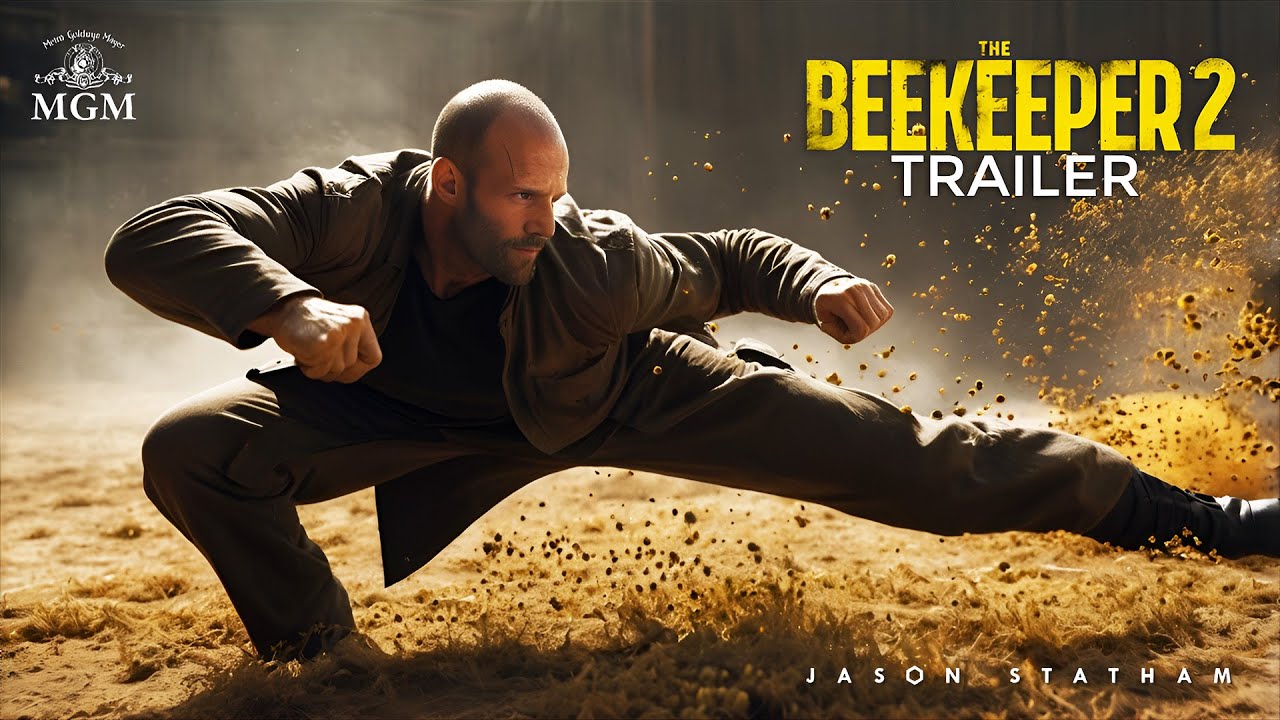
A Sequel That Knows Exactly What It Is
There is a particular confidence that comes with sequels that understand their own mythology, and The Beekeeper 2: Queen Slayer wears that confidence like a tailored coat. This is not a film interested in apologizing for excess. It leans into it, sharpens it, and then weaponizes it. Director and writers treat the Beekeeper universe less like a gimmick and more like a brutal modern fable about power, corruption, and the cost of obedience.

Jason Statham returns as Adam Clay, a man who once enforced order from the shadows and now finds himself labeled a defect by the very system he served. From its opening moments, the film makes it clear that Clay is no longer the hunter operating within the rules. He is prey, and the world has turned cold.

Story and Themes
The plot sends Clay across the frozen streets of London and Berlin, cities photographed as steel-and-ice labyrinths where morality has long since thawed away. The Hive, once an ominous abstraction, is now a fully realized global machine, and its rot leads straight to the top. Charlize Theron enters as the Queen Bee, a villain who does not merely crave control but engineers chaos itself, profiting from global conflict with serene elegance.

What elevates the story is its thematic clarity. Queen Slayer is about systems that eat their own, about what happens when loyalty is repaid with erasure. Clay is not fighting for redemption; he is fighting for truth, and the film understands the difference.
Performances
Jason Statham at Full Force
Statham has always been a physical actor, but here he brings a sharpened sense of weariness to Clay. This is a man who knows violence intimately and uses it not with joy, but with grim necessity. The brutality is relentless, occasionally shocking, and staged with a clarity that refuses to flinch.
Charlize Theron Steals the Film
As the Queen Bee, Charlize Theron delivers a performance that is both seductive and terrifying. She does not raise her voice; she does not need to. Her power lies in calm calculation, in the certainty that everyone else is expendable. The dynamic between her and Clay crackles with betrayal and ideological opposition, making their confrontations as psychological as they are physical.
Supporting Cast
Michael Caine adds gravitas in a supporting role that subtly reinforces the film’s central question: who benefits when institutions become untouchable? His presence grounds the film, reminding us that even operatic action stories need human anchors.
Action and Visual Style
The action in The Beekeeper 2 is unapologetically ferocious. One sequence involving an improvised weapon and a jar of honey walks the line between absurdity and audacity, and somehow lands squarely in the realm of unforgettable. The choreography is clean, the camera work respectful of geography, and the editing allows each blow to register.
Visually, the contrast between icy urban landscapes and sudden eruptions of fire becomes a kind of visual poetry. A climactic set piece involving a burning skyscraper and a hive tool is staged with operatic intensity, culminating in a twist that redefines the franchise’s future.
What Works Best
- A villain with genuine presence and thematic weight
- Action sequences that balance clarity with creative brutality
- A cold, wintry aesthetic that mirrors the film’s moral landscape
- A finale that dares to change the rules of the series
Minor Flaws
- The film’s mythology may feel dense to newcomers
- Some secondary characters exist purely as narrative fuel
Final Verdict
The Beekeeper 2: Queen Slayer is not content to simply escalate the action; it deepens the franchise’s soul. Jason Statham delivers perhaps his most focused performance to date, while Charlize Theron redefines what a modern action villain can be. The film understands that spectacle is most powerful when it serves a clear idea, and here that idea burns bright and cold.
Rating: 9/10